
The advantage of a native integration
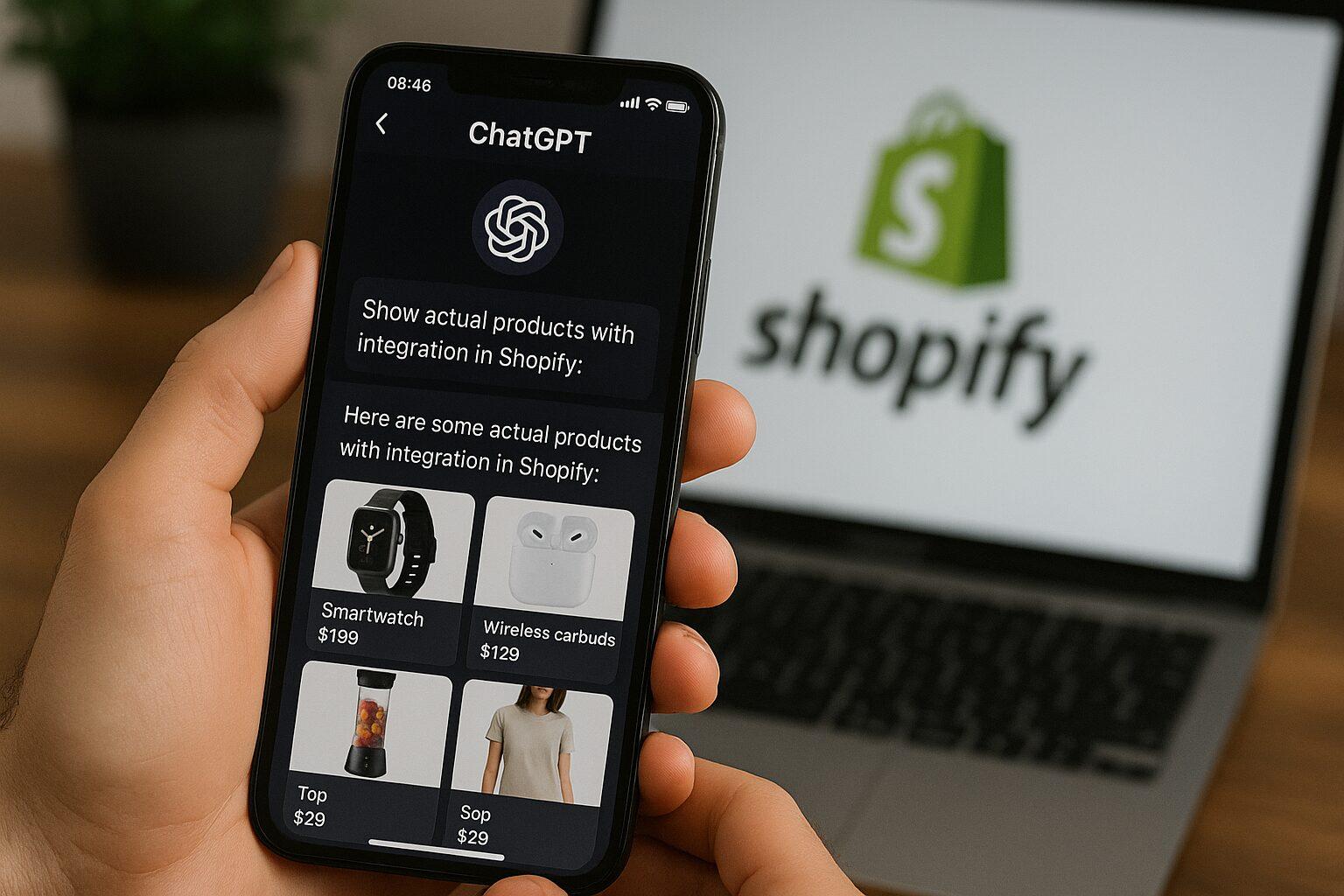
The big revelation from our conversation with the Shopify technical team was simple yet powerful: Shopify is the first ecommerce platform to natively integrate with ChatGPT. It’s not just a marketing slogan; it’s a structural advantage built on years of vision and architectural flexibility.
For years, Shopify has stood out for its modular and API-first approach, allowing it to quickly adapt to new channels, from social media to marketplaces. According to the engineer, that same flexible structure is precisely what made a deep native integration with the generative AI model possible. They didn’t have to force an old architecture into a new medium: they could build the shopping experience from scratch within the conversational environment itself.
What does this mean for the buyer? Imagine asking ChatGPT: "I need a warm, waterproof jacket for a hiking trip in the Alps this weekend." The AI processes the request, understands the weather, the activity, and the necessary materials, and not only recommends a product but also generates a secure shopping flow right there in the chat window, sourcing the item directly from a relevant Shopify store. The traditional cart, the abandoned tab, and the frustrating process of re-entering payment details on each new website disappear. The transaction is completed by the conversational engine itself.
This radical reduction in friction represents a huge leap. The engineer explained that legacy ecommerce platforms, burdened by rigid and monolithic systems, face a considerable challenge in replicating this native integration. Shopify's architecture allows them to own the conversion layer within the LLM itself, positioning them as the go-to platform for the future of conversational commerce.
The new conversational shopping journey
To understand the true scope of this transformation, it must be compared to the current model of digital commerce. Today, the discovery phase is separate from the research phase, and both are completely distinct from the conversion phase. Each step introduces an opportunity for customer abandonment.
In the "chat commerce" model, those steps merge. The AI acts as the ultimate filter, instantly connecting the user's intent with a specific product that is available, in stock, and relevant to the conversation.
Discovery: the buyer expresses a need or problem, for example: "I need a sturdy backpack that fits my 16-inch laptop for work."
Recommendation: ChatGPT, using its knowledge of product data across the Shopify ecosystem, suggests a model that meets the required size and durability.
Purchase: without leaving the conversation, the user confirms the purchase, and the order is placed through Shopify's integrated checkout.
It’s not just speed; it’s also relevance. Conversational AI has a deeper and more nuanced understanding of user intent than a keyword search could ever achieve. The conversion rates resulting from these perfect matches are expected to be significantly higher, rewarding merchants who ensure their product data is clear and accessible.
The wild west of SEO for LLMs
One of the most intriguing—and daunting—aspects of this new frontier is the competitive environment. The ability to sell directly within ChatGPT means that product positioning no longer solely relies on traditional SEO algorithms. The power to position products shifts to the LLM itself, creating a completely new and undefined ecosystem.
When discussing the competitive aspect and specifically how SEO will function among different Shopify stores, the engineer was very candid. He admitted that this new positioning system will be entirely managed by ChatGPT and that, for now, it remains a kind of alchemy.
"It’s like SEO in its early days, back in the 90s. There’s still no exact science, no universally accepted best practices, and the algorithms are a closely guarded secret."
The challenge for merchants is enormous. How do you optimize your product listing when your target is a massive, ever-evolving language model instead of a predictable search index?
The current advice, according to the technician, is to bet heavily on what should logically matter to an intelligent system:
Clear and complete product data: ensure your product descriptions are detailed, accurate, and answer any questions a customer might ask in a conversational manner.
Authoritative content: building a strong brand presence and authoritative content around your products is likely to convey trust and quality to the AI, which can draw on the entire web for context.
The engineer confirmed that, in general, following existing good SEO practices should also translate into better positioning within LLMs. Still, the path to truly mastering conversational commerce is still being built, and they promised dedicated content in the future to explain in more detail the emerging science of optimization for LLMs. It’s an exciting competitive arena where those who dare to experiment will likely gain a significant advantage soon.
Conclusion: towards conversational commerce
This alliance between Shopify and OpenAI is nothing short of a revolution. It’s the moment when the boundaries between researching, discovering, and buying completely disappear. Commerce becomes a utility, instantly available within the very tool millions of people use every day for everything else.
For merchants, this is both a demanding challenge and a huge opportunity. The first step is simple: ensure your product catalog is impeccable. The AI can only sell what it can accurately describe, understand, and trust.
We are leaving behind the era of the link to enter the era of conversational transactions. The new frontier of commerce is already here, and Shopify has given its merchants the first advanced tool to carve out a place in it. Businesses that adapt more quickly to this new intelligent environment will lead the market over the next decade.